WinSpirit Casino Account: Verification, Limits and Support
 Available in US
Contents
A WinSpirit Casino account connects identity checks, payment decisions, personal play limits and requests for help. Those functions affect a player’s experience as much as the choice of games. WinSpirit is described as using identity verification and offers deposit-limit and self-exclusion controls; independent coverage also refers to cooling-off and loss-limit options. The practical task is to understand what each control does before financial commitments are made.
This independent WinSpirit Canada Guide examines the account process without presenting a speculative sign-up tutorial. A browser form can change, and an individual’s verification requirements can vary. The durable questions concern accurate account details, the handling of identity information, access to support and a clear spending boundary. Those considerations apply whether the player uses Canadian dollars or cryptocurrency.
Identity verification connects the account to money movement
WinSpirit uses identity verification. That is a concrete part of its account operation, and it has consequences for consistency across personal details and financial transactions. Verification is not the same as the initial act of entering an email address or password: it is an assessment of account information and, where requested, evidence of the person responsible for the account.
For a player, the first preventive measure is accuracy. The name entered on the account, the contact channel used for notices and the details connected to a payment source should be consistent and under the legitimate user’s control. Typing a convenient nickname into a field requiring a legal name, sharing access with another person or attempting to use payment credentials that belong to someone else can turn an ordinary review into an avoidable dispute.
Financial checks can become particularly important when moving money out. Before a withdrawal request, a player should know how to receive account messages securely, where to review the transaction status and how to respond to a request for further information through an authenticated support channel. This is guidance on preparing accurate records, not a claim about the exact documents WinSpirit asks every player to provide or how quickly a particular review will finish.
Identity documents contain sensitive information. Treat them differently from ordinary screenshots of a game balance. If a support agent requests personal material, verify that the request belongs to the official account channel and that the destination is appropriate. Avoid sending unredacted identifiers into public reviews, social media threads or unfamiliar message accounts. Maintain a private record of what was submitted and any acknowledgement received.
- Use account details that accurately identify the account holder and can be kept current.
- Keep access to the registered email or communication method secure; it may carry security and transaction notices.
- Check requests for identity information inside a trusted account or support session before sending documents.
- Retain the date and reference of submissions and withdrawal requests so follow-up questions are specific.
A verification request does not, by itself, establish that a withdrawal will be approved on any particular date. Identity, funds movement and payment-provider processing are separate stages. The WinSpirit payments guide explains why a cashier’s current instructions and the chosen funding method are essential when assessing deposits, withdrawals and crypto transfers.
Where two screens or notices appear to give different instructions, recording the wording and seeking clarification through the official support channel is safer than inferring an exception. The aim is to prevent mismatched personal and transaction information from adding friction to a process already involving money.
Deposit limits and self-exclusion address different risks
WinSpirit lists deposit limits and self-exclusion as account controls. A deposit limit places a boundary on how much new money can be added over a defined interval according to the control’s displayed settings. Self-exclusion is a different intervention: it is intended to prevent continued gambling access for the chosen exclusion conditions. Neither control should be treated as merely a reminder to check the balance after an unexpectedly costly session.
Independent review coverage also describes cooling-off and loss-limit options. A cooling-off period provides a break from play, while a loss-limit setting aims to constrain losses under the chosen definition and time period. They serve different purposes and should not be used interchangeably. Their exact activation, available durations and interaction with other account settings belong to the controls shown in the live account rather than to a universal figure imposed in this guide.
| Control | Player need | Practical point |
|---|---|---|
| Deposit limits | Keep new funding within an intended ceiling | Understand the selected interval and how existing deposits count |
| Self-exclusion | Stop gambling access under an exclusion arrangement | Review the scope and consequences before activating |
| Cooling-off | Introduce a temporary break | Confirm how the displayed break operates before relying on it |
| Loss limits | Constrain losses under a defined measure | Look carefully at the account’s own definition and period |
Deposit limits and self-exclusion are specifically supported by both the operator’s information and independent coverage. Cooling-off and loss limits are described in third-party coverage and should be treated as reported features. This distinction matters when planning which safeguards to rely on: inspect the controls actually available in the account and do not assume one limit automatically applies to every type of financial activity.
Consider a hypothetical spending boundary of CA$100 for a chosen period. A deposit ceiling at that level can restrict fresh funding within its effective scope, but it cannot make a prior loss disappear. Nor is it equivalent to a self-exclusion decision that addresses the ability to continue gambling. The number is only an illustration of setting a personal boundary; it is not a WinSpirit minimum, maximum or recommended gambling budget.
It is also important to set a limit before an emotionally charged session rather than negotiating it after losses. Trying to restore a balance by depositing more is a common form of loss chasing. A useful plan separates money needed for essentials from money placed at risk, and treats reaching the limit as a reason to stop, not a prompt to change the limit.
Account controls cannot address every possible trigger for gambling harm. If a player is repeatedly exceeding limits, borrowing money to gamble or concealing losses, a longer interruption and independent help may be more appropriate than relying on another reminder or another brief pause.
Live chat and email offer two routes for account questions
WinSpirit offers 24/7 live chat and email support. The availability of chat at all hours is a useful channel fact, but it is not a promise of immediate resolution, approval of a disputed request or completion of identity checks within a particular window. Email can help preserve the wording of a request and any documents exchanged, while chat can be convenient for clarifying what information is needed next.
The best first message is narrow and factual. Include the kind of issue, an account or transaction reference where it is safe and necessary to do so, the date of the relevant event and the outcome being requested. It is usually unnecessary to share a complete payment-card number, account password or an exposed identity document in the opening message. Sensitive items should be supplied only through an authenticated, appropriate channel if requested.
| Situation | Useful description | Record to retain |
|---|---|---|
| Identity review | Which secure step requires attention? | Submission reference and dated notices |
| Deposit or cashout | Which transaction stage is awaiting action? | Method, amount, date and transaction reference |
| Play limit | What setting is currently in effect and for what interval? | Confirmation of the chosen setting |
| Account access | Which authenticated recovery path applies? | Case identifier and follow-up message |
A carefully framed support request makes it easier to distinguish an information problem from a service delay. If the answer mentions a policy or term, ask which specific account condition applies to the case rather than assuming that a generic response resolves a disputed transaction. Keep the exchange in a single traceable conversation where possible.
Recordkeeping is equally helpful when two departments or contact sessions become involved. An initial chat may identify a requested document; a later email may confirm receipt. Keeping both records avoids having to reconstruct the sequence from memory. A screenshot showing a general balance without a transaction reference can be less helpful than a concise timeline with the proper case number.
Security matters while seeking help. Look-alike sites, unsolicited messages and requests to move a conversation onto an unfamiliar channel create risks unrelated to whether the original account issue is legitimate. Use the established service’s own account interface when making contact and do not disclose authentication codes or passwords to someone claiming they need them to investigate.
A short account-readiness routine can prevent avoidable disputes
The most useful account preparation happens before money moves. Review the accuracy of your profile details, secure the contact channel, understand the funding method and set limits that reflect a financial boundary chosen outside a gambling session. These are ordinary risk-reduction steps rather than a claim that any account can be made free of financial harm.
For the funding side, decide whether a conventional CAD route or a cryptocurrency transfer matches your circumstances and tolerance for price movement. Crypto adds value volatility and the possibility of irreversible address or network errors; those risks remain even when a casino’s account interface works as expected. Deposit availability does not guarantee that the same method is suitable for withdrawing, and current cashier terms deserve their own review.
- Check identity: use the correct account details and protect authentication access.
- Plan funding: identify the actual method, transaction instructions and total cost before authorizing a payment.
- Set boundaries: apply an appropriate deposit limit or stronger interruption if needed.
- Keep evidence: retain confirmation notices, transaction identifiers and support case numbers without publishing private details.
- Reassess: if financial or emotional strain is appearing, stop and consult an independent gambling-harm service.
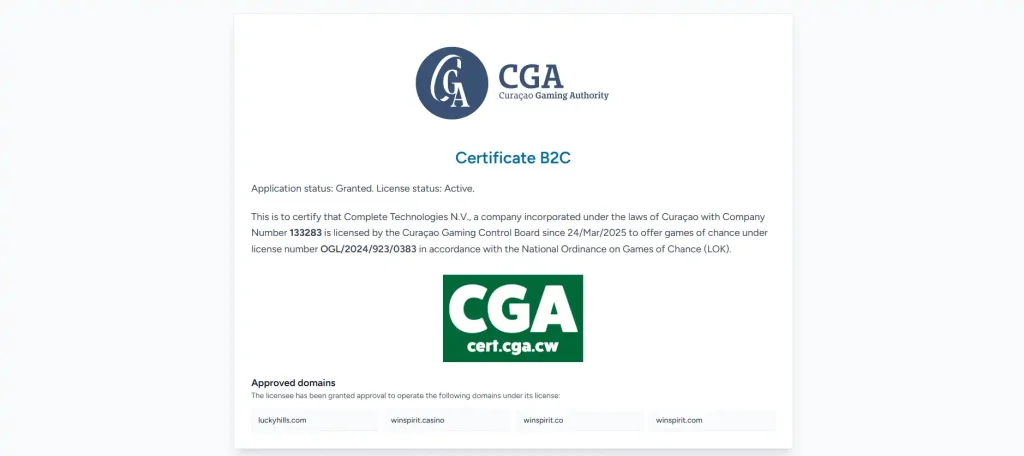
An account is also where different concerns should be separated. A question about an identity document belongs first to the authenticated account-support process. A dispute about a crypto network transfer requires the receiving instructions and blockchain transaction record. A question about the licence behind a branded web address is a different matter, covered by the dedicated licence and safety guide. Keeping those lines of inquiry distinct makes a response more meaningful.
Finally, consider who can access the device. A shared laptop or phone may preserve logins, notifications or saved credentials even after the browser tab closes. Sign out deliberately, use appropriate screen locking and review saved passwords or payment details. A home-screen shortcut or browser installation does not remove the need for secure account habits.
The account’s controls are tools, not substitutes for a spending plan or independent help. A realistic measure of account readiness is whether the player can describe where the money will go, how access is protected and what would cause them to stop. Those questions matter regardless of the outcome of the next game.
Questions about WinSpirit accounts
Does WinSpirit Casino use identity verification?
Yes. Identity verification forms part of the account process. Keep profile information accurate and respond to any legitimate request through a secure account channel.
Can a WinSpirit player set a deposit limit?
Yes. Deposit limits are among the account controls identified for WinSpirit. Review the selected period and on-screen conditions before relying on a setting.
Does WinSpirit Casino offer self-exclusion?
Yes. Self-exclusion is listed as a responsible-gambling control. It is different from a deposit limit and should be reviewed for its intended scope.
How can a player contact WinSpirit about an account issue?
WinSpirit offers 24/7 live chat and email support. Provide a concise issue description and retain case references, while keeping passwords and sensitive documents out of unfamiliar channels.
WinSpirit account safeguards work best when set before play
WinSpirit’s use of identity checks, deposit limits and self-exclusion gives readers concrete account functions to examine, alongside reported cooling-off and loss-limit controls. Continuous chat availability and an email route add ways to ask questions, though neither promises a particular outcome in a specific case.
The practical priority is consistency: secure details, understand payment instructions, set boundaries in advance and preserve a record of important decisions. If gambling starts to harm finances or wellbeing, access controls and independent support matter more than extending a session.
This material was created by the WinSpirit Canada Guide team.
Related posts

WinSpirit Casino Payments in Canada: CAD, Cards and Crypto

WinSpirit Casino Mobile: PWA on iPhone and Android